Evidence of Security Patrols for Insurance: What Counts
What would an insurer see if it asked you to show that a security patrol took place? Strong evidence of security patrols for insurance is a clear, dated record linking an officer to their attendance, the areas checked, what they found and what happened next.
It’s reasonable to expect a patrol record to show more than “site checked”. Useful details can include arrival and departure times, completed checkpoints or routes, relevant photographs, incidents and reasons for any missed or delayed checks.
This article explains why insurers may request patrol records, what officers typically inspect on site and which documents can help show patrols took place. It also explains why clear reporting matters when a patrol identifies damage, a safety concern or suspicious activity.
Key Takeaways
- Understand why patrol records can help demonstrate a site’s security arrangements when an insurer asks for evidence.
- See which parts of a property officers may prioritise during a patrol, from access points to less visible areas.
- Learn how attendance records, checkpoint data and clear notes can help show who attended and what happened.
- Discover when mobile patrols may help provide a more consistent security presence and useful site records.
Why Do Insurers Ask for Security Patrol Records?
Insurers use patrol records to assess whether agreed security measures operated and how incidents were handled. Under Martyn’s Law, the enhanced tier applies to qualifying premises expecting 800 or more people, according to The National Archives.
Incident Reports and Photos
An incident report links an event to a patrol, while relevant photographs show site conditions. For example, an officer might photograph a damaged rear door and record its location. The report should state when the officer attended, what they found, what action they took and who they contacted. It should also identify any follow-up required and who will handle it. Officers assess incidents on arrival, secure the area and report to the control room. They escalate to police or emergency services when required.
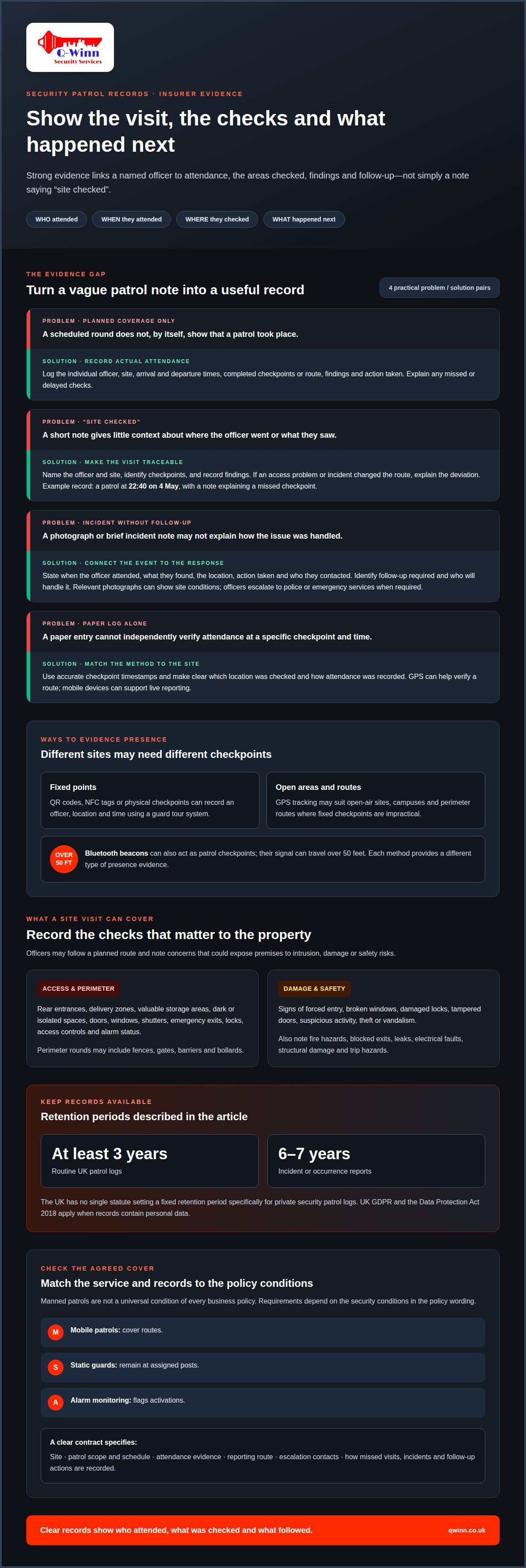
Retention matters when an insurer later asks for a record. Keep routine UK patrol logs for at least three years. Retain incident or occurrence reports for six to seven years. The UK has no single statute setting a fixed retention period specifically for private security patrol logs. UK GDPR and the Data Protection Act 2018 apply when records contain personal data, according to the Information Commissioner’s Office.
Insurance Conditions and Contract Details
Whether manned patrols are required depends on the security conditions in your policy wording. They are not a universal condition of every business policy. Compare mobile patrols, static guards and alarm monitoring against your site’s risks: mobile patrols cover routes, static guards remain at assigned posts, and alarm monitoring flags activations. Contracts should specify the site, patrol scope and schedule, attendance evidence, reporting route and escalation contacts. They should also explain how missed visits, incidents and follow-up actions are recorded.
What Do Security Patrol Officers Check During a Site Visit?
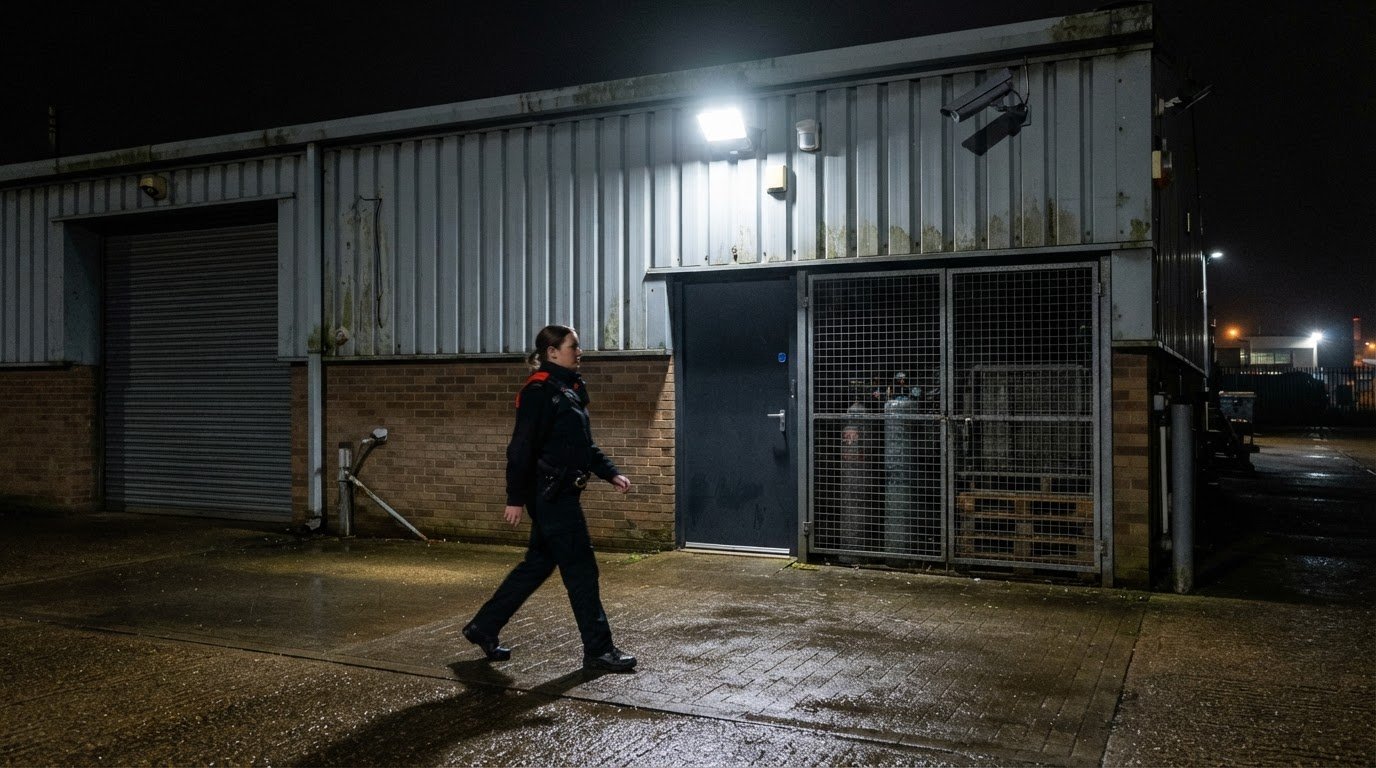
A site inspection combines attendance evidence with checks tailored to the property. An officer may arrive by vehicle, follow a planned route and record concerns that could expose the premises to intrusion, damage or safety risks.
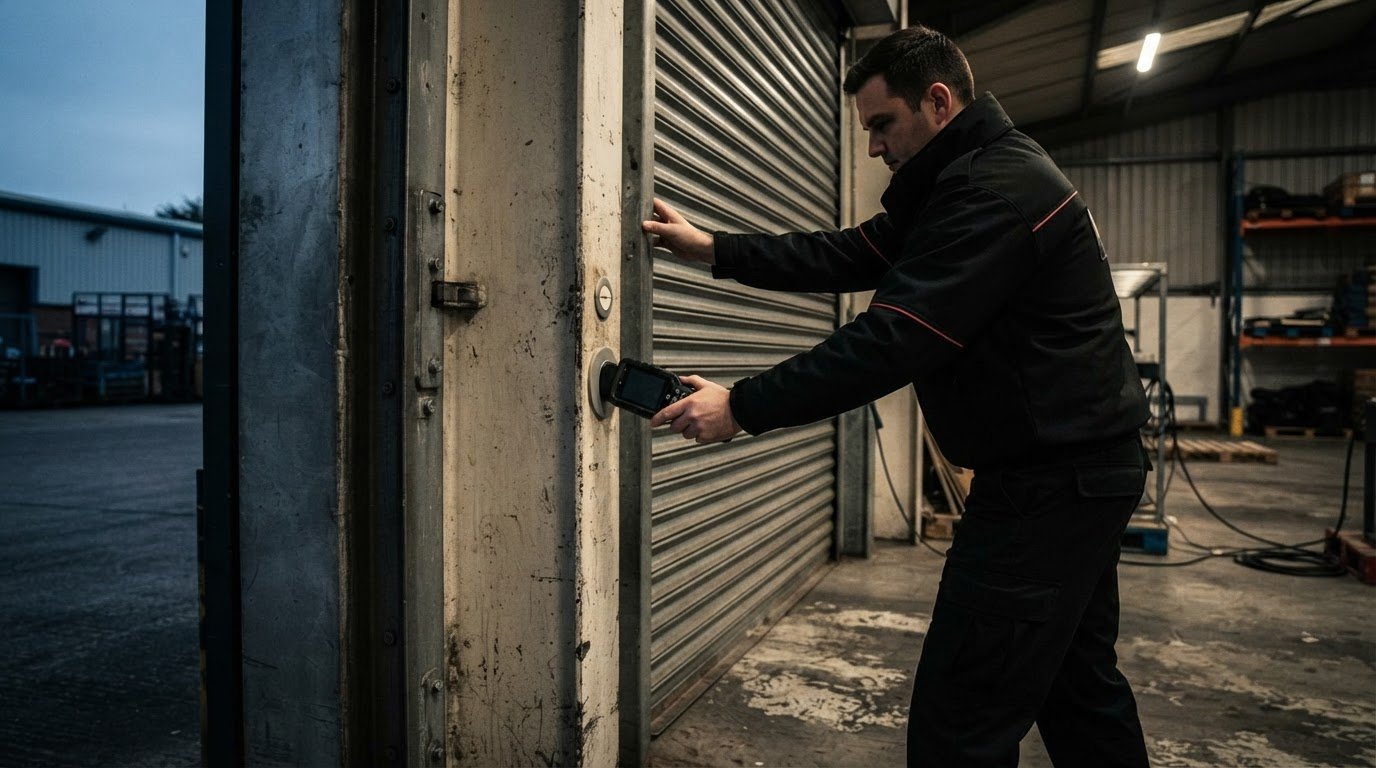
GPS data can help verify a route, while a mobile device can support live reporting. Officers may scan QR codes, NFC tags or physical checkpoints at fixed points using a guard tour system. These records can connect an officer, location and time. Accurate checkpoint timestamps help show whether visits followed the agreed intervals. Paper logs alone cannot independently verify attendance at a specific checkpoint and time.
Open-air sites, campuses and perimeter routes may suit GPS tracking where fixed checkpoints are impractical. Bluetooth beacons can also act as patrol checkpoints; their signal can travel over 50 feet. Each method gives a different type of presence evidence, so the patrol record should make clear which location was checked and how attendance was recorded.
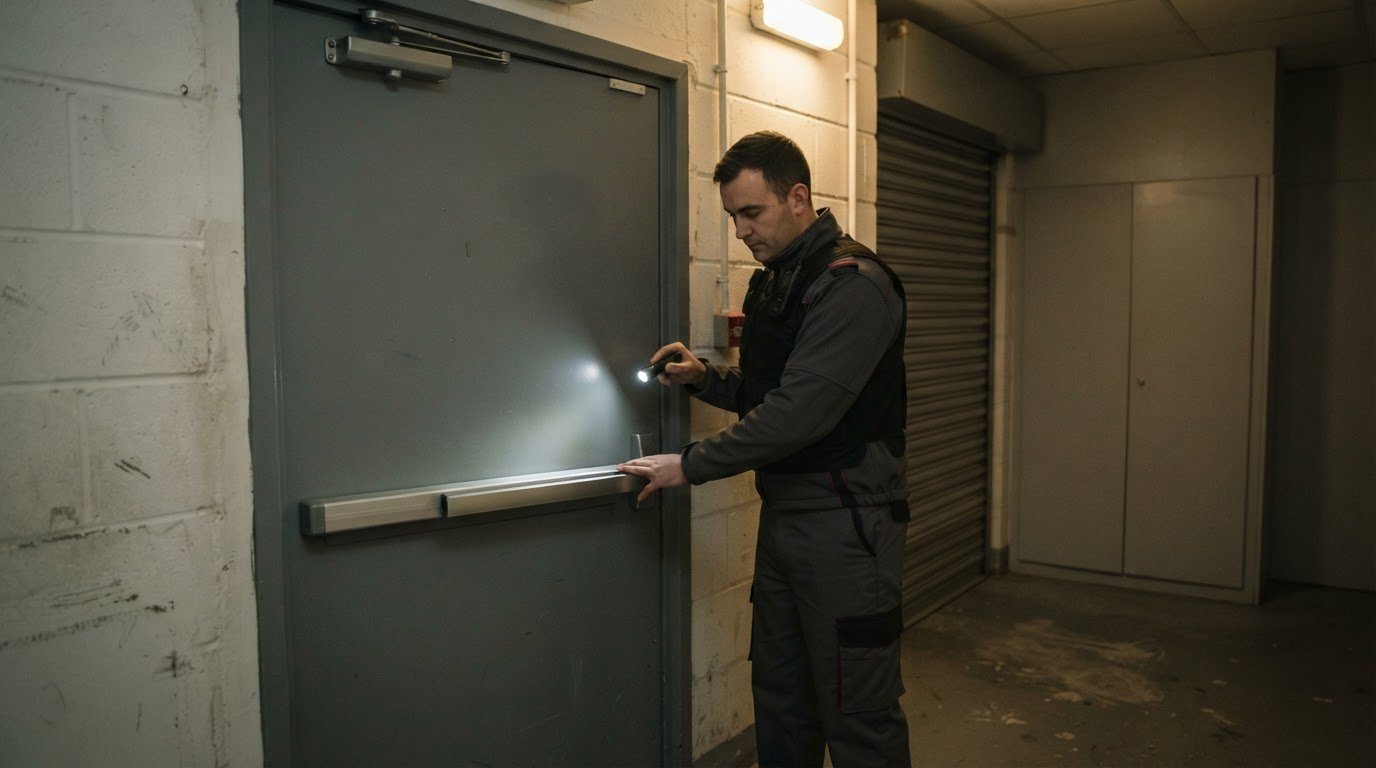
During an inspection, officers look for signs of forced entry, broken windows, damaged locks, tampered doors, suspicious activity, theft or vandalism. Checks may cover rear entrances, delivery zones, valuable storage areas and dark or isolated spaces. Officers may inspect doors, windows, shutters, emergency exits, locks, access controls and alarm status. Perimeter rounds can include fences, gates, barriers and bollards.
Officers also note fire hazards, blocked exits, leaks, electrical faults, structural damage and trip hazards. These observations help make security services more responsive to the site’s actual risks. For a property that needs planned vehicle visits, mobile patrol services can provide a practical coverage option.
Evidence that security patrols took place
Useful evidence links a named officer to a site, a visit time and recorded activity. The clearest operational picture comes from records showing actual attendance, not merely planned coverage.
Patrol Visit Records
Patrol visit records document who attended, when they arrived and which checks they completed. They help establish which protection measures were active if a client or insurer questions a visit.
A clear entry identifies the individual officer, site and checkpoints, then records findings and action taken. For example, a report might show a patrol at 22:40 on 4 May, with a note explaining any missed checkpoint. If an access problem or incident changed the route, the record should explain the deviation. This gives the reader context, not just a tick beside a scheduled round.
Proof Supplied by Patrol Companies
Useful evidence can include visit logs, patrol compliance reports and incident or occurrence reports. Together, these documents can show scheduled activity, completed visits and what happened after an incident.
Photographs can support a report when they are relevant, dated where possible and linked to a specific patrol. A compliance record should identify the officer, not just a shift or post. Where available, a live or near-live dashboard can show mobile patrol activity between formal reviews. These records can help clarify whether agreed measures were operational and support a business’s position in an insurance discussion about protection or liability.
For documented site visits, discuss mobile patrol requirements and the records that support your premises’ security arrangements.
Q-Winn Security: Mobile Patrol
Q-Winn Security provides Mobile Patrol for businesses seeking a visible security presence across their premises. It can suit sites where access points, perimeter areas or changing operational needs call for patrol visits rather than a guard stationed at one post.
Where a fixed on-site presence is more appropriate, Static / Manned Guarding offers another option. Key Holding & Alarm Response supports sites that need a response to alarm activations, while Lock-Up & Unlock Services cover opening and securing premises.
Before arranging cover, set out your site risks and the security measures your insurer expects. Clear requirements help shape the discussion about patrol coverage and the service that fits your premises. Contact Q-Winn Security to discuss your security needs.
Make Your Security Plan Clearer
Use your patrol requirements as the starting point for a security plan that fits how your premises operate. Clear priorities help align site coverage with the protection you need and make the service arrangement easier to understand. Evidence of security patrols for insurance is most useful when records reflect the agreed approach in practice.
Q-Winn Security offers Mobile Patrol, Key Holding & Alarm Response, and Lock-Up & Unlock Services. These options address different operational needs, from scheduled site visits to responding to alarm activations or securing premises at opening and closing.
Consider which parts of your site need attention and what support would help your team manage them. To discuss an arrangement for your premises, contact Q-Winn Security. A clear conversation can help you take the next step with confidence.
Frequently Asked Questions
How Often Should Patrols Be Conducted to Meet Policy Conditions?
Follow the frequency and schedule set out in your policy or related security agreement. For evidence of security patrols for insurance to reflect the agreed arrangements, recorded visits should match the required schedule. A warehouse with an overnight patrol condition needs records corresponding to those visits. If opening hours or site risks change, review whether the existing schedule still suits the premises.
What Should Be Included in a Security Patrol Report?
A useful report identifies the officer and site, records the visit time and areas covered, and describes findings and actions. Add relevant photographs and explain exceptions, such as a locked gate preventing access. For example, a report about a damaged shutter should note its location and the response. This provides context beyond a simple attendance entry.
What UK Laws Govern How Patrol Records Should Be Recorded?
UK GDPR and the Data Protection Act 2018 govern patrol records when they contain personal data, according to the Information Commissioner’s Office. No single UK statute sets a fixed retention period specifically for private security patrol logs. Handle records with attention to their contents, purpose and access, particularly when reports identify officers, visitors or people involved in incidents.
What Happens if Patrol Records Are Missing, Incomplete, or Falsified When a Claim Is Made?
Missing or incomplete records can make it harder to establish which security measures were in place when an incident occurred. An insurer may assess the available evidence against the policy terms and circumstances of the loss. Falsified entries can seriously undermine the credibility of records and accounts of events. Preserve original documents, and explain corrections transparently rather than changing past entries without context.
What Evidence Do UK Insurers Require to Prove Security Patrols?
There is no single evidence format for every UK insurer; the policy and circumstances of a claim shape what is relevant. Evidence of security patrols for insurance may include patrol logs, checkpoint or GPS records, compliance reports and incident documentation. Records are clearer when they connect each visit to an identified officer and site, with details showing what took place rather than merely what was scheduled.
Frequently Asked Questions
Follow the frequency and schedule set out in your policy or related security agreement. For evidence of security patrols for insurance to reflect the agreed arrangements, recorded visits should match the required schedule. A warehouse with an overnight patrol condition needs records corresponding to those visits. If opening hours or site risks change, review whether the existing schedule still suits the premises.
A useful report identifies the officer and site, records the visit time and areas covered, and describes findings and actions. Add relevant photographs and explain exceptions, such as a locked gate preventing access. For example, a report about a damaged shutter should note its location and the response. This provides context beyond a simple attendance entry.
UK GDPR and the Data Protection Act 2018 govern patrol records when they contain personal data, according to the Information Commissioner’s Office. No single UK statute sets a fixed retention period specifically for private security patrol logs. Handle records with attention to their contents, purpose and access, particularly when reports identify officers, visitors or people involved in incidents.
Missing or incomplete records can make it harder to establish which security measures were in place when an incident occurred. An insurer may assess the available evidence against the policy terms and circumstances of the loss. Falsified entries can seriously undermine the credibility of records and accounts of events. Preserve original documents, and explain corrections transparently rather than changing past entries without context.
There is no single evidence format for every UK insurer; the policy and circumstances of a claim shape what is relevant. Evidence of security patrols for insurance may include patrol logs, checkpoint or GPS records, compliance reports and incident documentation. Records are clearer when they connect each visit to an identified officer and site, with details showing what took place rather than merely what was scheduled.