How to prevent vandalism on commercial property with glazing and paint
An empty commercial property can be more exposed because fewer people are present to spot damage. To understand how to prevent vandalism on commercial property, focus on layered protection: stronger glazing, anti-vandalism coatings, reinforced doors and windows, and measures that keep vacant sites secure and well maintained.
It’s understandable to focus first on visible damage such as smashed windows or graffiti. But reducing easy access and opportunities to cause damage matters too, especially when a building is unoccupied.
This article explains how glazing and specialist paint can help, which entry points may need reinforcement, and how security measures can support vacant premises. You’ll have a practical starting point for protecting your property and deciding when professional security support may help.
Key Takeaways
- Consider glazing and anti-vandalism coatings to make vulnerable surfaces harder to damage and easier to restore.
- Review doors, windows and other access points for weaknesses that could make forced entry easier.
- Give vacant premises extra attention by reducing opportunities for damage and keeping the property secure and maintained.
- For on-site security support, consider whether patrols, guarding or key holding and alarm response fit your property’s needs.
1. Double glazing and anti-vandalism paint
For exposed shopfronts, double glazing adds another layer between an impact and the interior. Security glazing and protective film can help hold broken glass together and reduce scattered shards after damage. Polycarbonate or acrylic sheeting can also help prevent glass from breaking into pieces on impact. Before choosing a measure, assess visibility, existing frames and the likely type of damage.
Paint is another option for signs, shutters and metal enclosures. A clear, hydrophobic, non-stick coating can make it harder for spray paint or permanent marker to bond, making removal easier. It works best on suitable surfaces, so match the coating to the material. Remove graffiti promptly to reduce the chance of repeat marking and keep the frontage maintained.
Outside, motion-sensor floodlights can suit dark areas such as loading bays and car parks. They switch to full brightness when movement is detected, making concealment harder. Keep landscaping from blocking sightlines: overgrown shrubs near entrances or windows can create hiding places, while clear views across paths and access points support surveillance.
If vandalism occurs, photograph the damage when safe and record the date, time and what happened. Don’t approach anyone suspected of causing it. UK police advise that criminal damage can be reported by calling 101. Preserve relevant evidence, such as photographs or available footage, and avoid disturbing the damaged area before recording it.
Some councils or local business programmes may offer support for security improvements, but schemes and eligibility vary by area. Contact the relevant council to ask about current grants. Consider glazing, coatings, lighting and site design together, as each addresses a different opportunity for damage.
2. Reinforcing doors and windows
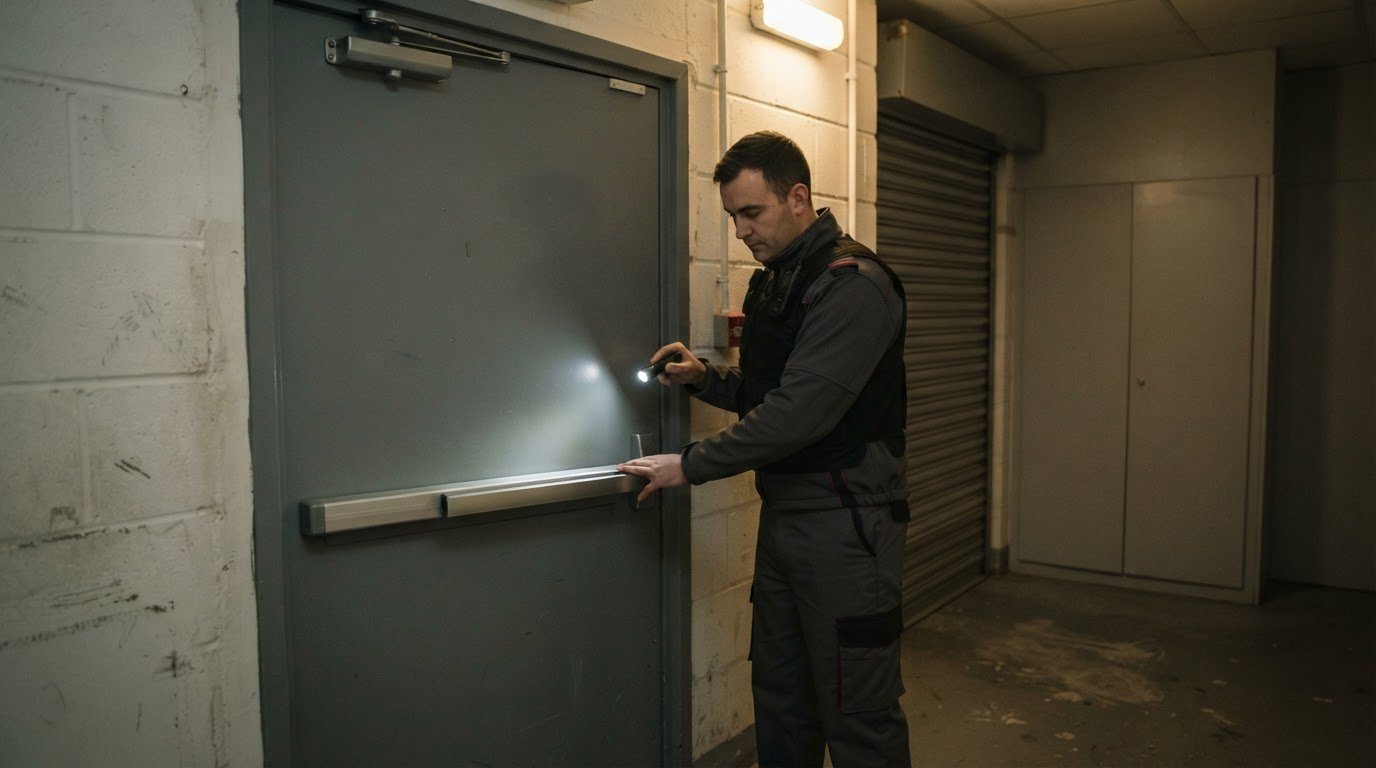
Start with the weakest access points: shopfront doors, rear windows, service entrances and gates. Multi-point locks secure a door to its frame at three or more separate points, helping resist attempts to force it open. A steel latch guard plate can cover the exposed gap between a door and frame, making it harder to interfere with the lock using a crowbar or screwdriver.
Keyless entry can reduce reliance on physical keys, but access credentials still need to be controlled. When a business moves premises, replace existing locks and key cards so people with old keys or credentials cannot retain access. For a keyless steel door, assess the door, frame, locking mechanism and entry routine as one system. A strong door is less effective if its frame or a nearby window remains vulnerable.
Security roller shutters can cover doors and windows while premises are closed. Fixed external grilles may suit vulnerable side or rear windows, while retractable grilles can be opened during trading hours. Repair broken windows, doors and locks promptly, then secure gates and other access points after closing. This removes easy entry opportunities before they become a weak link.
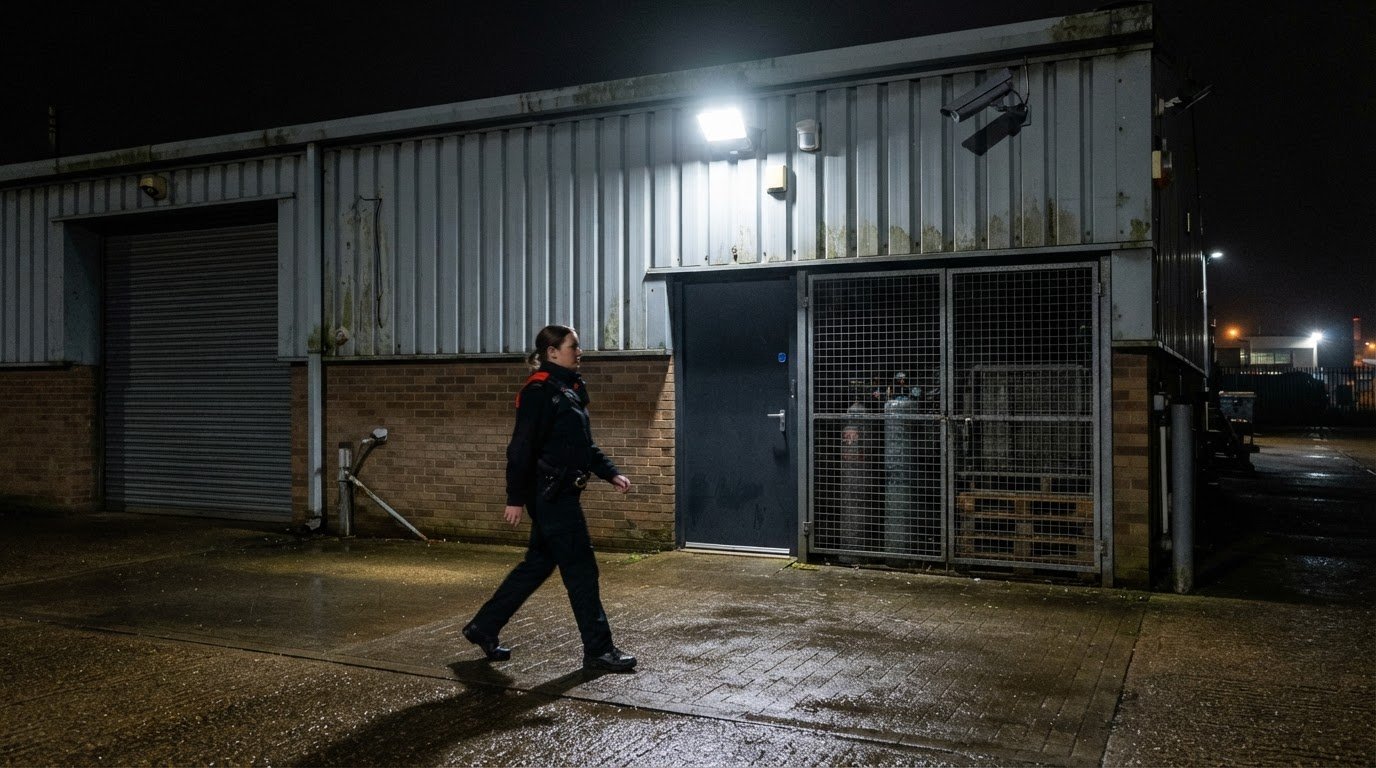
Position cameras to cover entrances and vulnerable areas, including any approach where vehicles could stop. Recording can support an investigation, but it doesn’t prevent entry by itself. Where a site needs a visible presence around doors and windows, static manned guarding can help monitor the premises and respond to suspicious activity.
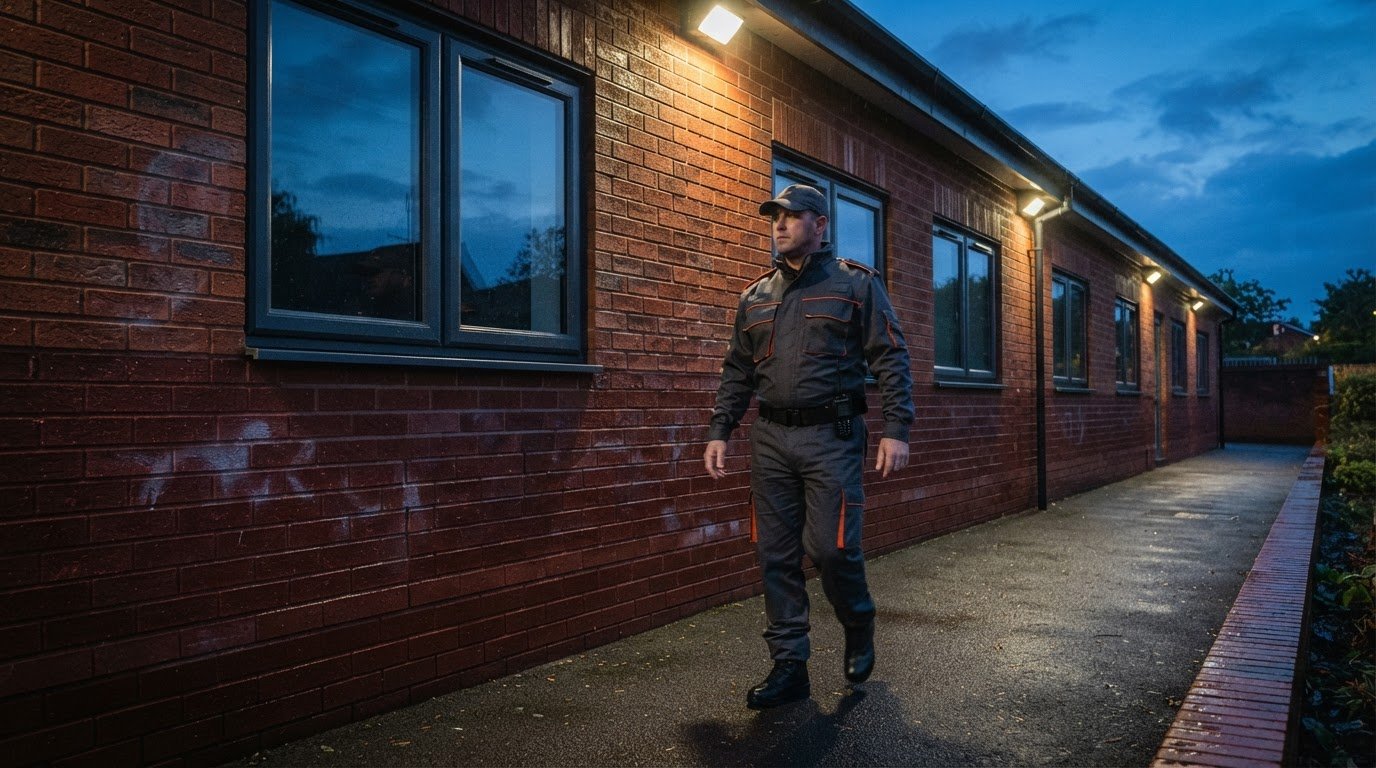
Smashed windows and graffiti are common forms of vandalism at business premises. The Broken Window Theory proposes that unrepaired broken windows may be followed by further window-breaking, burglary and squatting.
3. Antisocial behaviour affecting vacant commercial property
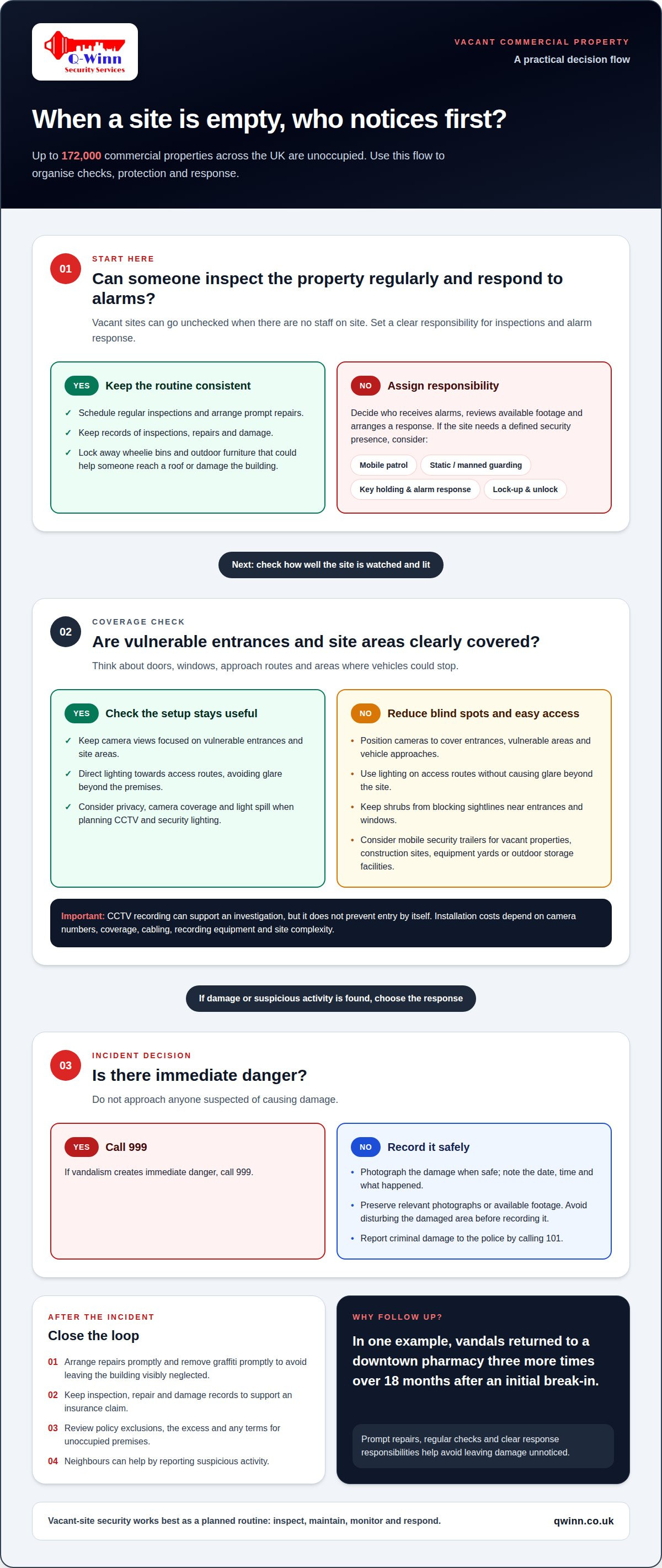
Up to 172,000 commercial properties across the UK are unoccupied. Without staff on site, graffiti, broken access points and other destruction may go unnoticed. A vacant-property plan should include regular inspections, prompt repairs and clear responsibility for responding to alarms. Lock away wheelie bins and outdoor furniture, which could help someone reach a roof or damage the building.
CCTV and security lighting should be planned with privacy, coverage and light spill in mind. Keep camera views focused on vulnerable entrances and site areas, and direct lighting towards access routes without causing glare beyond the premises. Commercial CCTV installation costs depend on camera numbers, coverage, cabling, recording equipment and site complexity; a quote should reflect those requirements.
Commercial property insurance may cover vandalism, but the policy wording determines what damage is insured. Review exclusions, the excess and any terms for unoccupied premises. Keep records of inspections and repairs, along with photographs of graffiti or damage, to support an insurance claim.
Set out who receives alarms, reviews available footage and arranges a response. If vandalism creates immediate danger, call 999. Otherwise, record the damage safely and report criminal damage to the police. Remove graffiti promptly and repair damage to avoid leaving the building visibly neglected. Neighbours can also help by reporting suspicious activity.
For a vacant site needing a defined security presence, discuss security support for unoccupied premises.
Vandalism is the intentional damaging or destruction of property and can lead to theft or looting if steps are not taken to prevent it. Commercial-site vandalism patterns from 2020 to 2025 include smash-and-grab theft, graffiti, forced entry and rooftop access. In the page's example, vandals returned to a downtown pharmacy three more times over 18 months after an initial break-in. Vandalism can cost businesses money for cleaning and replacing windows, and can also affect the wider community. Mobile security trailers may be useful for construction sites, equipment yards, vacant commercial properties, and outdoor storage facilities.
Q-Winn Security
Q-Winn Security can support a commercial vandalism-prevention plan with a visible security presence and practical site routines. For premises with recurring damage or vulnerable periods when staff are absent, Mobile Patrol or Static / Manned Guarding can help deter suspicious activity. Lock-Up & Unlock Services support consistent opening and closing routines, while Key Holding & Alarm Response provides a response point when an alarm is activated.
The right combination depends on the property, its operating hours and the risks around its entrances and vacant areas. These services complement physical measures such as reinforced glazing, secure doors and prompt repairs; they don’t replace them. For a considered discussion about security for your premises, contact Q-Winn Security.
Set a clear plan for ongoing protection
A practical way to decide how to prevent vandalism on commercial property is to treat security as an ongoing part of managing the site, not a one-off response to damage. Assign responsibility for reviewing incidents, recording repairs and updating procedures when a building becomes vacant or its use changes. This continuity helps connect decisions, rather than leaving gaps between physical protection and the response to suspicious activity.
Q-Winn Security can help you consider the operational support that fits your premises. If you’re ready to discuss the next step, contact Q-Winn Security for support. A clear, considered plan can help you move forward with greater confidence.
Frequently Asked Questions
What are the most effective ways to prevent vandalism on commercial property?
The strongest approach combines measures chosen for the site’s specific weak points. For example, a retail unit with repeated damage near its rear service entrance may need stronger access protection and a clear closing routine, while a vacant building may need more frequent oversight. Review incident patterns and prioritise the areas most exposed, rather than treating every part of the premises identically.
Do security shutters, anti-graffiti coatings or protective films help prevent property damage?
Yes, each can reduce a different type of damage, but they work in different ways. Shutters provide a physical barrier over openings; coatings make graffiti easier to remove; protective films can help retain broken glass. Their value depends on the surface, location and likely damage. A coating, for example, may suit a metal sign, while a film may be more relevant to glazing.
What should a commercial property vandalism prevention plan include?
Assign a named person to coordinate prevention and incident response, with clear steps for reporting damage, preserving photographs and notifying the insurer. Record recurring locations and patterns, then review the plan after an incident, a change in occupancy or a change to site access. For a vacant unit, define who has authority to enter and who arranges urgent repairs.
Frequently Asked Questions
The strongest approach combines measures chosen for the site’s specific weak points. For example, a retail unit with repeated damage near its rear service entrance may need stronger access protection and a clear closing routine, while a vacant building may need more frequent oversight. Review incident patterns and prioritise the areas most exposed, rather than treating every part of the premises identically.
Yes, each can reduce a different type of damage, but they work in different ways. Shutters provide a physical barrier over openings; coatings make graffiti easier to remove; protective films can help retain broken glass. Their value depends on the surface, location and likely damage. A coating, for example, may suit a metal sign, while a film may be more relevant to glazing.
Assign a named person to coordinate prevention and incident response, with clear steps for reporting damage, preserving photographs and notifying the insurer. Record recurring locations and patterns, then review the plan after an incident, a change in occupancy or a change to site access. For a vacant unit, define who has authority to enter and who arranges urgent repairs.