Improve business security: match spend to risk on a budget
The biggest security budget isn’t automatically the safest one. The answer to how to improve business security on a budget is to prioritise risks by how likely they are and how serious the consequences could be, then match spending to your organisation’s needs and risk tolerance. That gives each pound a clear purpose.
It’s understandable to want strong protection without letting spending grow unchecked. Start by separating essential controls from inherited costs, then consider where a security gap could affect your people, property or operations. A focused review helps you decide what to maintain, adjust or handle more proportionately.
This article explains how to assess security priorities, set a budget around business needs and review whether existing measures still make sense. Use the practical steps to weigh spending against risk, rather than relying on last year’s figures or the most recent concern.
Key Takeaways
- Review existing security spending from the ground up, and retain measures that address current risks rather than automatically carrying forward last year’s budget.
- Rank threats by likelihood and potential impact, then focus investment on risks your organisation cannot afford to tolerate.
- Build the budget around business objectives and operational needs, not a fixed percentage change to previous spending.
- Match physical security support to the task, whether that means alarm response, mobile patrols, lock-up and unlock services, or manned guarding.
1. Cost optimisation for security budgets
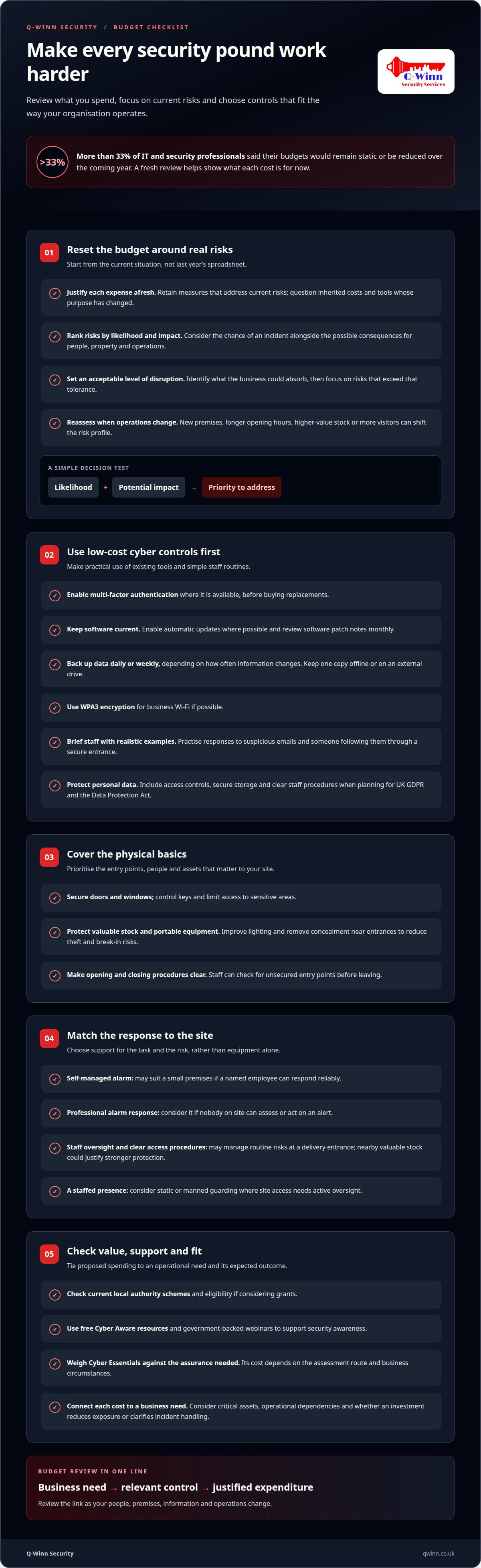
Start with a zero-based budget: justify each expense afresh instead of carrying forward previous spending. More than 33% of IT and security professionals said their budgets would remain static or be reduced over the coming year. That makes reviewing each tool’s current purpose essential.
Use existing, low-cost controls before buying replacements. Enable multi-factor authentication where it is available, and use free UK government resources to support staff awareness. Brief employees with realistic examples, such as suspicious emails or someone following them through a secure entrance, so they can practise safer responses without costly training.
For low-cost technology, enable automatic updates where possible and review software patch notes monthly. Schedule data backups daily or weekly, depending on how often information changes, and keep one copy offline or on an external drive. Use WPA3 encryption for business Wi-Fi if possible.
A self-managed alarm may suit a small premises if a named employee can respond reliably. If nobody on site can assess or act on an alert, consider a professional alarm response service. Compare how an alert will be handled with the risks to your premises, rather than judging on equipment alone.
When planning for UK GDPR and the Data Protection Act, include safeguards for personal data, such as access controls, secure storage and clear staff procedures. Choose measures that reflect the information you hold and the potential impact of exposure.
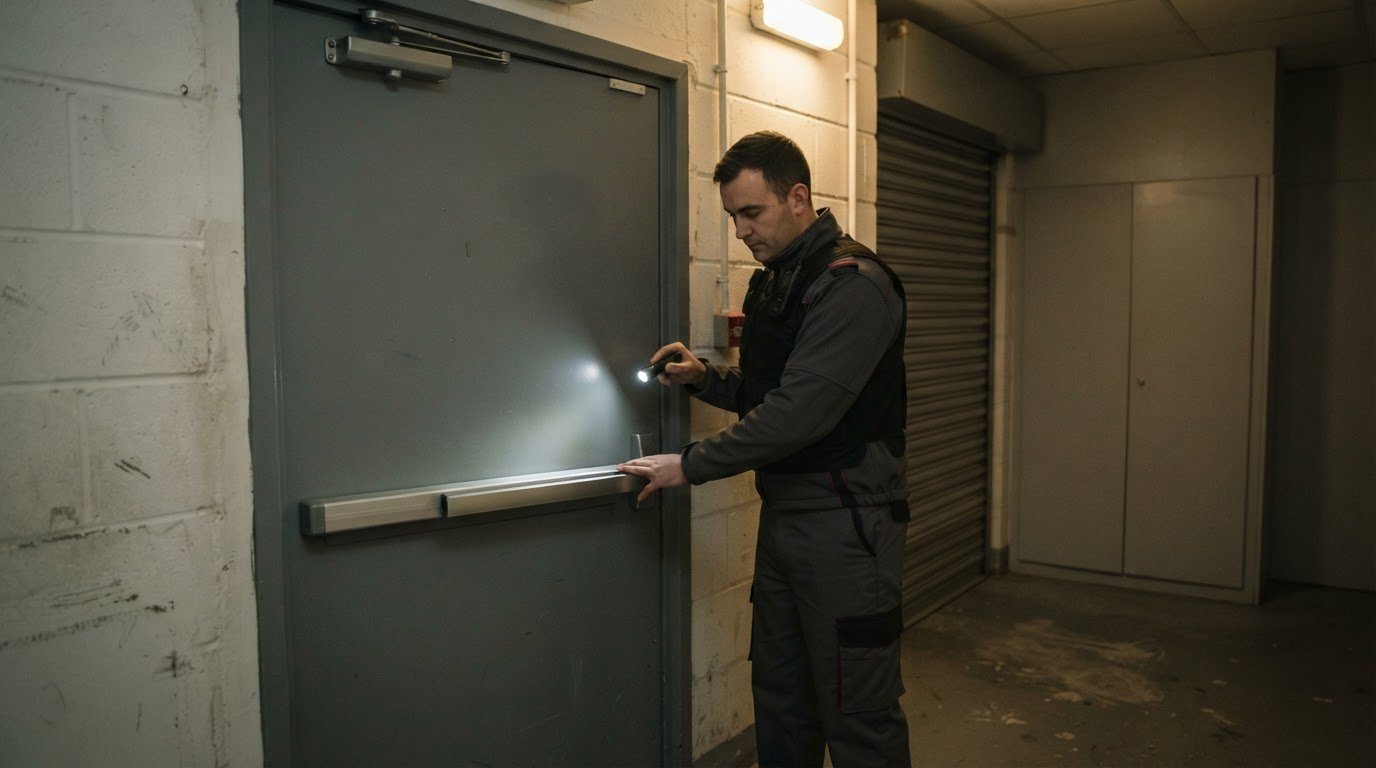
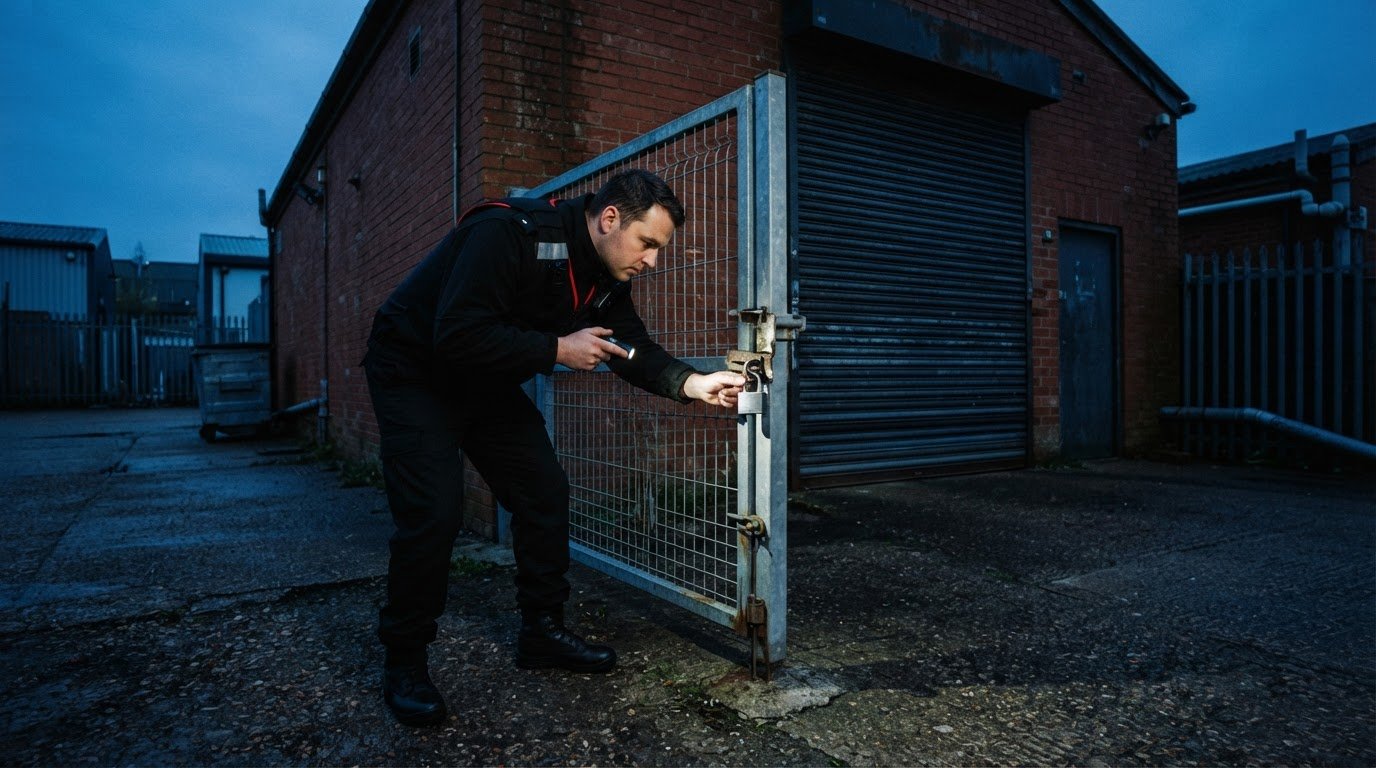
Start with basic physical security: secure doors and windows, control keys, limit access to sensitive areas and protect valuable stock. Clear opening and closing procedures help staff identify unsecured entry points before they leave.
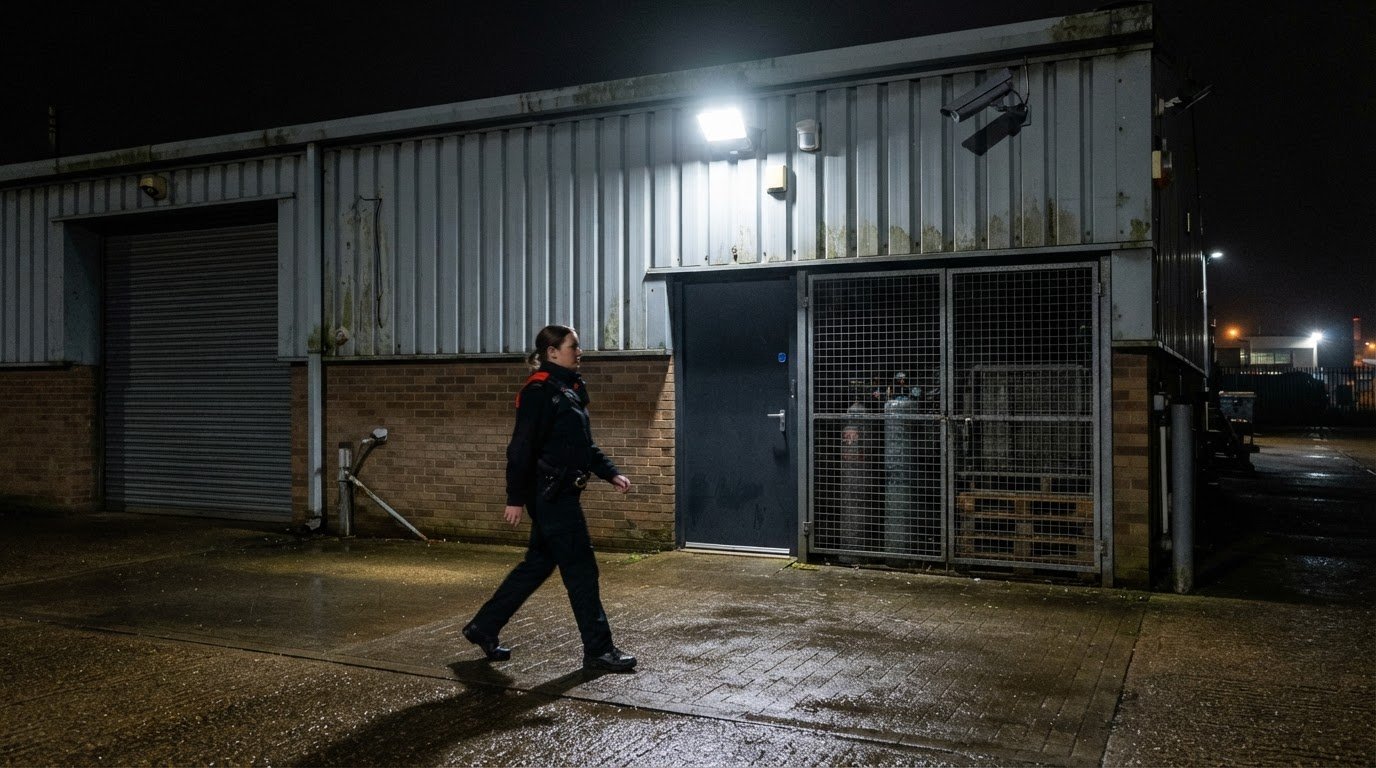
To reduce theft and break-in risks, improve lighting, remove concealment near entrances and secure portable equipment. For grants, check current local authority schemes and eligibility; free Cyber Aware resources and government-backed webinars can support security awareness. Cyber Essentials costs depend on the assessment route and business circumstances, so weigh the fee against the assurance your organisation needs.
2. Aligning security spending with risk tolerance
Rank each risk by likelihood and potential impact before increasing spending. A break-in at a warehouse with valuable stock may be less likely than unauthorised entry at a busy reception, but the consequences could be greater. Comparing likelihood and impact helps you decide which exposure to address first.
Set your risk tolerance by asking how much disruption the business could absorb. A small retailer might manage a brief delay after a minor stock loss, but not the loss of equipment essential for trading. Record what level of disruption is acceptable, then identify controls for risks that exceed it.
Compare each proposed control with the risk it addresses. A complex system may be unnecessary if a simpler measure manages the same exposure. At a delivery entrance, for example, clear access procedures and staff oversight may address routine risks. Valuable stock stored nearby could justify stronger protection. Base the decision on likely harm, not on how sophisticated a solution appears.
Review the assessment when operations change. New premises, longer opening hours, higher-value stock or increasing visitor numbers can shift the risk profile. Reassess likelihood, impact and existing controls, then direct spending towards the largest remaining exposure. A staffed presence may suit sites where access needs active oversight; static and manned guarding can be considered for that specific requirement. This keeps security decisions tied to business priorities, rather than adding measures without a clear purpose.
3. Aligning budgets with business needs
A security budget should match current needs and support business objectives. A report cited in the research found that 49% of organisations had enough budget to meet their current cyber security needs. Use that finding as a prompt to test whether spending protects the work your organisation must deliver. A practical answer to how to improve business security on a budget is to connect every proposed expense to a clear operational need.
Start with the business plan, not last year’s spreadsheet. List the services, premises, systems and information that keep operations running. Then identify what a breach or disruption would prevent, such as fulfilling orders, serving customers or accessing essential records. Research may be needed to build a budget around your organisation’s specific criteria.
Carrying forward previous spending is quick, but assumes the earlier budget still fits. Zero-based budgeting takes more effort because each proposed expense needs fresh justification. Review the largest costs first, retain controls tied to real priorities and question overheads that no longer support the business. This approach is particularly useful when revenue, staffing or operating hours have changed.
Build decisions on a broader foundation: business objectives, critical assets, operational dependencies and changing threats. NIST CSF 2.0 can structure a cybersecurity programme and help explain budget priorities to decision-makers. Track whether each investment delivers a meaningful outcome, such as reduced exposure or clearer incident handling. Review those measures as operations change, rather than waiting for a breach to expose a gap.
For organisations weighing how to improve business security on a budget, the key is a traceable link between need, control and expenditure. For a site-specific discussion of physical security priorities, talk through your business requirements.
Q-Winn Security
Q-Winn Security helps businesses in Bracknell and the surrounding area match physical security support to site risks and operational needs. Once priorities are clear, Key Holding & Alarm Response supports a plan for alarm activations, while Mobile Patrol and Static / Manned Guarding provide different forms of security presence. Lock-Up & Unlock Services can help manage opening and closing routines. Each service can be considered in light of the specific risks and requirements of your premises.
Identify where support would make a practical difference, such as responding to alarms, overseeing a site or managing opening and closing. This keeps the discussion focused on your requirements and how they relate to your security priorities.
Contact Q-Winn Security to discuss your business’s security needs.
Make your next security decision count
Turn your priorities into a practical plan. Decide which risks need action now, which can be managed through existing procedures and what would prompt a budget review. This keeps security spending connected to business needs as your premises, operations or assets change.
For physical security support in Bracknell and the surrounding area, Q-Winn Security offers Key Holding & Alarm Response, Mobile Patrol, Static / Manned Guarding and Lock-Up & Unlock Services. A focused discussion can help you consider which support best fits your priorities. Request a free quote to discuss your requirements.
If you’re deciding how to improve business security on a budget, take the next step with a clear view of your risks and objectives. Contact Q-Winn Security to discuss your requirements and move forward with confidence.
Frequently Asked Questions
How Much Should an Organisation Spend on Security?
There’s no single security budget that suits every organisation. Base spending on the assets at risk, potential disruption and protection already in place. A retailer holding valuable stock may need different controls from a small office with few physical assets. Review the budget when operations change, such as after moving premises or introducing new services.
Why Should UK Small Businesses Pay Attention?
Security matters because a crime can affect both daily operations and the resources needed to recover. Between January 2021 and January 2023, 81% of UK small businesses were affected to some extent by online or physical crime. For a small firm, consider practical consequences such as lost stock, unavailable equipment or interrupted customer service.
What are the cheapest ways for UK small businesses to improve security?
Begin with procedures that are simple to put in place. Assign responsibility for checking doors, windows and equipment at closing, and record returned keys. Ask staff to challenge unfamiliar visitors politely and direct them to reception. Move high-value portable items out of public view, and remove packaging that advertises new equipment from outside the premises.
How much do basic business security measures cost in the UK?
The resources a security measure requires depend on your premises, the risk being addressed and whether equipment, installation or ongoing support is involved. A written opening-and-closing routine, for example, needs staff time; physical security services address different operational needs. For each proposed measure, record its purpose and the resources needed to maintain it.
How should a small business prioritise security risks and spending?
Use a simple risk register to make decisions clear. For each threat, record the asset affected, likely operational consequences, existing safeguards and action still needed. Assign an owner and a review date. For example, a business that relies on one storage room can prioritise access controls there before extending similar measures to lower-risk areas.
Frequently Asked Questions
There’s no single security budget that suits every organisation. Base spending on the assets at risk, potential disruption and protection already in place. A retailer holding valuable stock may need different controls from a small office with few physical assets. Review the budget when operations change, such as after moving premises or introducing new services.
Security matters because a crime can affect both daily operations and the resources needed to recover. Between January 2021 and January 2023, 81% of UK small businesses were affected to some extent by online or physical crime. For a small firm, consider practical consequences such as lost stock, unavailable equipment or interrupted customer service.
Begin with procedures that are simple to put in place. Assign responsibility for checking doors, windows and equipment at closing, and record returned keys. Ask staff to challenge unfamiliar visitors politely and direct them to reception. Move high-value portable items out of public view, and remove packaging that advertises new equipment from outside the premises.
The resources a security measure requires depend on your premises, the risk being addressed and whether equipment, installation or ongoing support is involved. A written opening-and-closing routine, for example, needs staff time; physical security services address different operational needs. For each proposed measure, record its purpose and the resources needed to maintain it.
Use a simple risk register to make decisions clear. For each threat, record the asset affected, likely operational consequences, existing safeguards and action still needed. Assign an owner and a review date. For example, a business that relies on one storage room can prioritise access controls there before extending similar measures to lower-risk areas.