
Dealing with Trespassers on Private Property in the UK
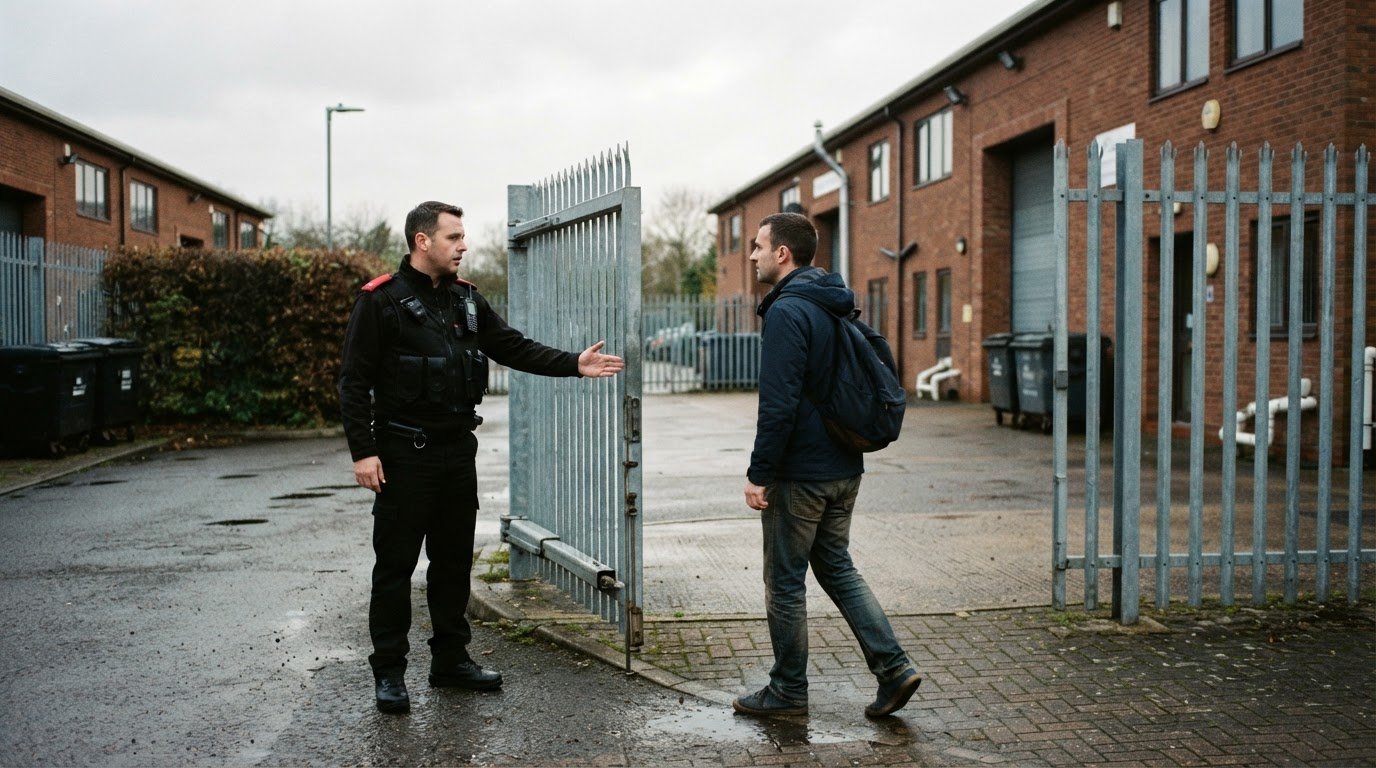
A trespasser on your land doesn’t automatically mean a crime has been committed: trespass to land is generally not a criminal offence in the UK. Dealing with trespassers on private property in the UK usually starts by clearly stating that they don’t have permission to be there and asking them to leave. Some situations, including squatting in residential premises, can be criminal offences.
Finding someone on your land can feel intrusive. The right response depends on what they’re doing and whether they have permission to be there. This guide covers practical first steps, the difference between ordinary trespass and criminal offences, and when police powers may apply. It also explains what to do if someone refuses to leave, how trespass differs from squatting or unauthorised camping, and why using force can create legal risks. This will help you protect your property while keeping your response lawful and measured.
Key Takeaways
- Clearly tell someone they have no permission to be on your land and ask them to leave; avoid escalating the situation.
- Understand why ordinary trespass is usually treated differently from specific offences that can involve police powers or arrest.
- Recognise that entering or remaining without permission can count as trespass even when no damage has been caused.
- Consider whether key holding, mobile patrols, lock-up and unlock services, or manned guarding could help protect your property.
Can I be arrested for trespassing?
Ordinary trespass is generally not a criminal offence, so simply entering private land doesn’t automatically lead to arrest. When dealing with trespassers on private property in the UK, this distinction matters: police powers depend on the conduct and circumstances, not simply on the landowner’s objection.
Police involvement in trespass cases
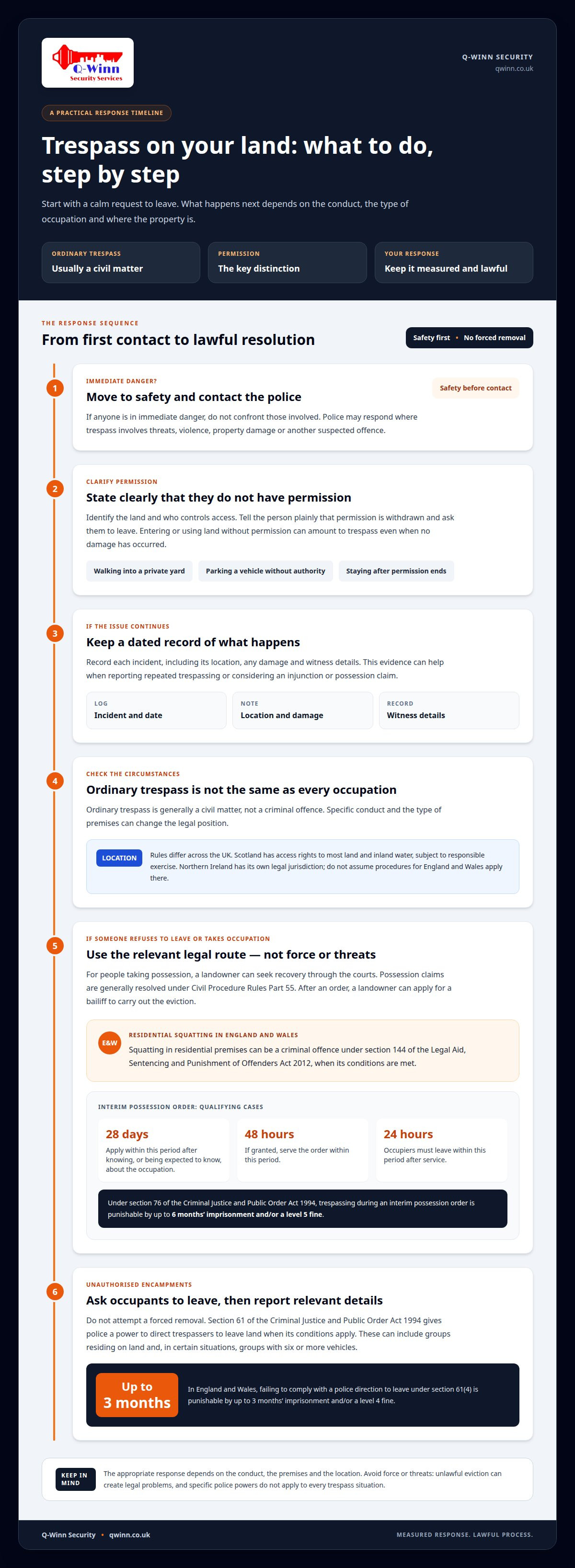
Police may respond if trespass involves threats, violence, property damage or another suspected offence. If anyone is in immediate danger, move to safety and contact the police rather than confronting those involved. For a nuisance or continuing occupation, keep a dated record of incidents, including locations, damage and witness details. This evidence can help when reporting repeated trespassing or considering an injunction or possession claim.
Police directions to leave land
Section 61 of the Criminal Justice and Public Order Act 1994 gives police a power to direct trespassers to leave land when its conditions apply. These can include groups residing on land and, in certain situations, groups with six or more vehicles. According to The National Archives (legislation.gov.uk), in England and Wales, failing to comply with a police direction to leave land under section 61(4) of the Criminal Justice and Public Order Act 1994 is punishable by up to 3 months' imprisonment and/or a level 4 fine.
For an unauthorised encampment, ask the occupants to leave without attempting a forced removal, then report relevant details to police. Scotland has different access rules: according to The National Archives (legislation.gov.uk), the Land Reform (Scotland) Act 2003 establishes access rights to most land and inland water, subject to responsible exercise. A clear plan for dealing with trespassers on private property in the UK should account for the location and circumstances.
Is Trespassing a Crime in the UK?
Trespass is generally a civil matter, not a criminal offence. If people enter land without consent and take possession, a landowner can seek recovery through the courts. In the UK, trespass possession claims are generally resolved under Civil Procedure Rules Part 55, according to the Ministry of Justice. A boundary dispute or vehicles left on land may need a different assessment from occupation that prevents the owner using premises.
In England and Wales, squatting in residential premises can be a criminal offence under section 144 of the Legal Aid, Sentencing and Punishment of Offenders Act 2012, when its conditions are met. A landowner seeking to remove squatters should avoid force or threats and use the lawful possession process. They can bring a possession claim and, after an order, apply for a bailiff to carry out the eviction. That route protects both the landowner’s rights and the legal process.
An Interim Possession Order may be available in qualifying cases. Apply within 28 days of knowing, or being expected to know, about the occupation. If granted, serve it within 48 hours; occupiers must leave within 24 hours after service. Under section 76 of the Criminal Justice and Public Order Act 1994, trespassing during an interim possession order is punishable by up to 6 months’ imprisonment and/or a level 5 fine.
For a possession claim, a hearing may be listed at least 2 days after service for residential premises, or 5 days for other land. An expedited High Court process may obtain an order within 24-48 hours in qualifying cases, such as when trespassers have camped, excluded the landowner, and caused damage or anti-social activity. Keep evidence of occupation and loss ready for the claim.
Definition and types of trespass
The key distinction is permission: entering or using land without permission can amount to trespass, even if no damage occurs. Whether someone can be removed, or whether their conduct becomes a criminal offence, depends on the circumstances.
What counts as trespass
Trespass to land can include walking into a private yard, parking a vehicle without authority, or staying after permission has ended. A person’s entry need not be intentional for a claim to arise. By contrast, consent or another legal right to enter may provide a defence. First, identify the land, clarify who controls access, and tell the person plainly that permission is withdrawn.
Not every unauthorised presence has the same legal consequences. Squatting in residential premises in England and Wales is treated differently from an ordinary boundary dispute. Don’t assume you can use force to remove someone: unlawful eviction can itself create legal problems. Keep your response proportionate and seek legal advice if occupation or a disputed right to enter complicates matters.
Regional differences in trespass rules
Rules depend on where the land is. In England and Wales, trespass is generally a civil matter, although specific conduct can amount to a criminal offence. Scotland has a distinct access framework: according to The National Archives (legislation.gov.uk), the Land Reform (Scotland) Act 2003 establishes access rights to most land and inland water, subject to responsible exercise of those rights.
Northern Ireland has its own legal jurisdiction, so don’t assume that procedures for eviction or remedies in England and Wales apply there. First establish which country the property is in, then assess the conduct and any permission or access right involved. For continuing access concerns, discuss site security arrangements.
Q-Winn Security: Key Holding & Alarm Response
Q-Winn Security provides Key Holding & Alarm Response for property owners who need a managed response to alarm activations. Secure key holding supports access to a site when an alarm sounds, while Mobile Patrol provides a visible security presence. For premises that need an on-site presence, Static / Manned Guarding is another option. Lock-Up & Unlock Services help businesses manage access at opening and closing times.
These services support property security, but they don’t replace police powers or the legal process for removing an occupier. If you’re managing recurring access concerns, consider what level of site presence suits your property and operating needs. Contact Q-Winn Security to discuss a tailored security plan for your site.
Make your property plan clear
A measured approach to dealing with trespassers on private property in the UK starts before another incident: decide how access concerns should be handled and who needs to be informed. Match the arrangements to your site. Key Holding & Alarm Response supports alarm response, Mobile Patrol adds a patrol presence, and Lock-Up & Unlock Services help manage routine access at opening and closing.
Q-Winn Security can discuss how these services fit your property and security needs. A clear plan gives your team a practical point of reference and helps keep responses consistent. Contact Q-Winn Security for support and take a considered next step towards protecting your site.
Frequently Asked Questions
What can I do if someone trespasses on my property?
Keep a safe distance, clearly tell the person they don’t have permission to be there, and ask them to leave. Don’t block their exit or attempt to remove them physically. If there’s an immediate threat, damage or suspected offence, contact the police. Once safe, note the time, location, what happened and any witnesses.
Can you claim damages for trespass?
Yes. A court may award nominal damages when someone’s rights were infringed but no financial loss occurred. An award may instead reflect the trespasser’s financial benefit from using the land. Keep relevant records, such as evidence of lost income or how the property was used, to help explain the incident’s impact.
Can the police remove trespassers?
Not automatically: ordinary trespass is generally a civil matter, so police don’t remove someone solely because they’re on private land. They may act where specific legal powers apply or where conduct involves a suspected offence. For example, a police direction under section 61 of the Criminal Justice and Public Order Act 1994 applies only in certain circumstances.
Do “No Trespassing” signs have legal effect?
A clearly positioned sign can tell visitors that entry isn’t permitted and make your position plain. However, it doesn’t by itself turn ordinary trespass into a criminal offence or give you authority to use force. Keep signs legible and place them where people approach the property, such as at an entrance or boundary gate.
Is squatting in a commercial property illegal?
Squatting in commercial premises isn’t the residential squatting offence under section 144 of the Legal Aid, Sentencing and Punishment of Offenders Act 2012. However, occupying business premises without permission may still amount to civil trespass. A landowner can seek possession through the courts; avoid trying to remove occupiers through force or threats.
Frequently Asked Questions
Keep a safe distance, clearly tell the person they don’t have permission to be there, and ask them to leave. Don’t block their exit or attempt to remove them physically. If there’s an immediate threat, damage or suspected offence, contact the police. Once safe, note the time, location, what happened and any witnesses.
Yes. A court may award nominal damages when someone’s rights were infringed but no financial loss occurred. An award may instead reflect the trespasser’s financial benefit from using the land. Keep relevant records, such as evidence of lost income or how the property was used, to help explain the incident’s impact.
Not automatically: ordinary trespass is generally a civil matter, so police don’t remove someone solely because they’re on private land. They may act where specific legal powers apply or where conduct involves a suspected offence. For example, a police direction under section 61 of the Criminal Justice and Public Order Act 1994 applies only in certain circumstances.
A clearly positioned sign can tell visitors that entry isn’t permitted and make your position plain. However, it doesn’t by itself turn ordinary trespass into a criminal offence or give you authority to use force. Keep signs legible and place them where people approach the property, such as at an entrance or boundary gate.
Squatting in commercial premises isn’t the residential squatting offence under section 144 of the Legal Aid, Sentencing and Punishment of Offenders Act 2012. However, occupying business premises without permission may still amount to civil trespass. A landowner can seek possession through the courts; avoid trying to remove occupiers through force or threats.